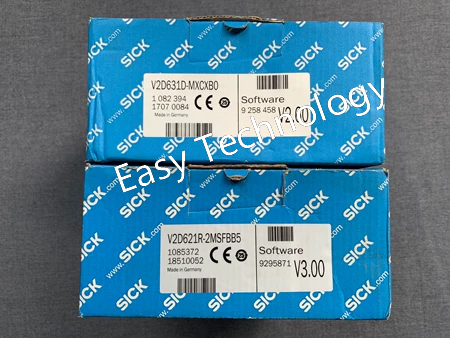
The SICK V2D621D-2MSFBB5 is part of the SICK V2 series of laser scanners. It provides reliable and accurate measurements for various industrial applications, including obstacle detection and navigation. With a wide field of view and robust performance, the V2D621D series is ideal for applications where high precision and durability are required in challenging environments.
Typically up to 80 meters, but the maximum range may vary depending on the specific environment (e.g., surface reflectivity and ambient lighting conditions).
Field of View (FOV):
270° scanning angle, allowing a broad detection range for objects and obstacles in a given environment.
Resolution:
Angular resolution of up to 0.25° to 0.5°, offering precise data points for more accurate distance and object detection.
Scan Rate:
Adjustable scanning rate, typically from 5 Hz to 50 Hz, depending on the configuration and application requirements.
Power Supply:
Typically 24 VDC, providing compatibility with most industrial control systems and automation environments.
Output:
Ethernet (TCP/IP) and PROFIBUS or EtherCAT interfaces for easy integration with control systems, ensuring high-speed data communication.
Protection Class:
IP65 or higher, which ensures that the scanner is resistant to dust and water ingress, making it suitable for industrial environments.
Temperature Range:
Operates in a temperature range of -10°C to +50°C (depending on the model variant), which makes it reliable for both indoor and outdoor use in various climatic conditions.
Accuracy:
The scanner offers high accuracy in angular and distance measurements, typically within ±30 mm at a 10-meter distance.
Mechanical Mounting:
Designed for easy integration into systems with flexible mounting options. Can be installed on various surfaces and adapted to different systems.
Safety Features:
Advanced safety features like safety-certified stop functions and emergency stop capabilities for use in safety-critical applications.
Housing:
The laser scanner comes in a rugged, compact housing designed to withstand the demands of industrial environments, including vibrations, shocks, and exposure to dust and moisture.